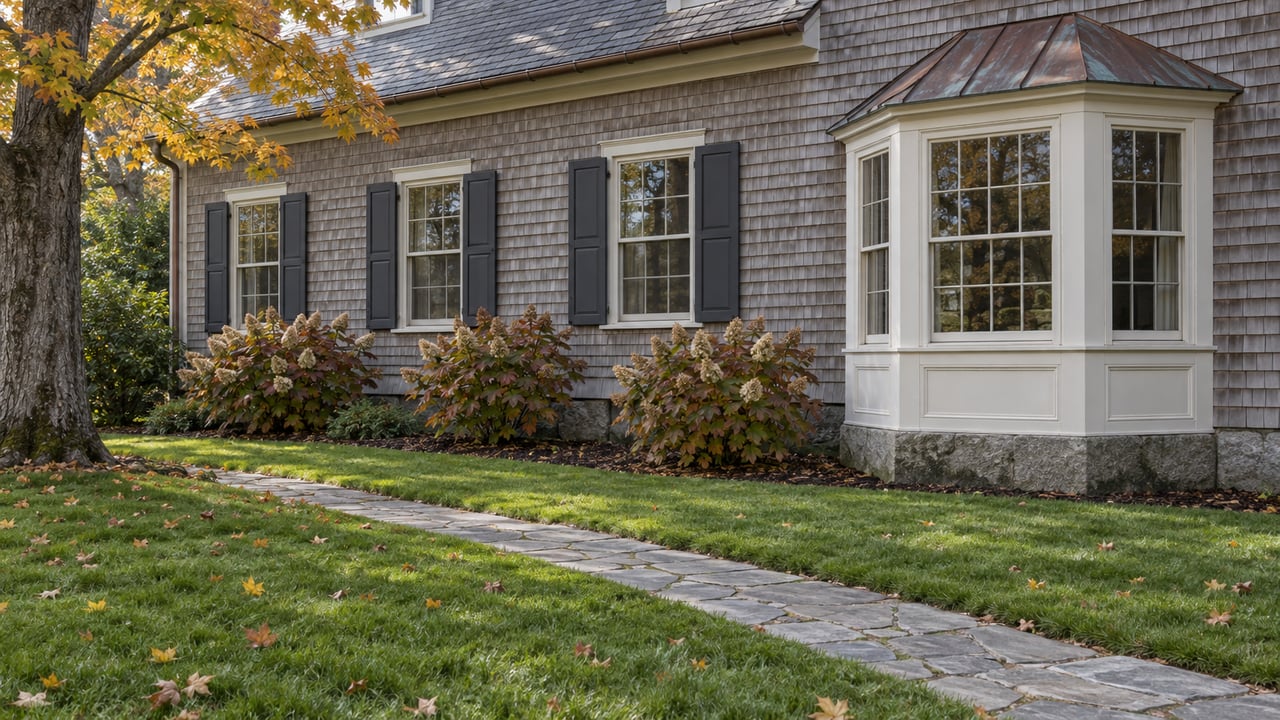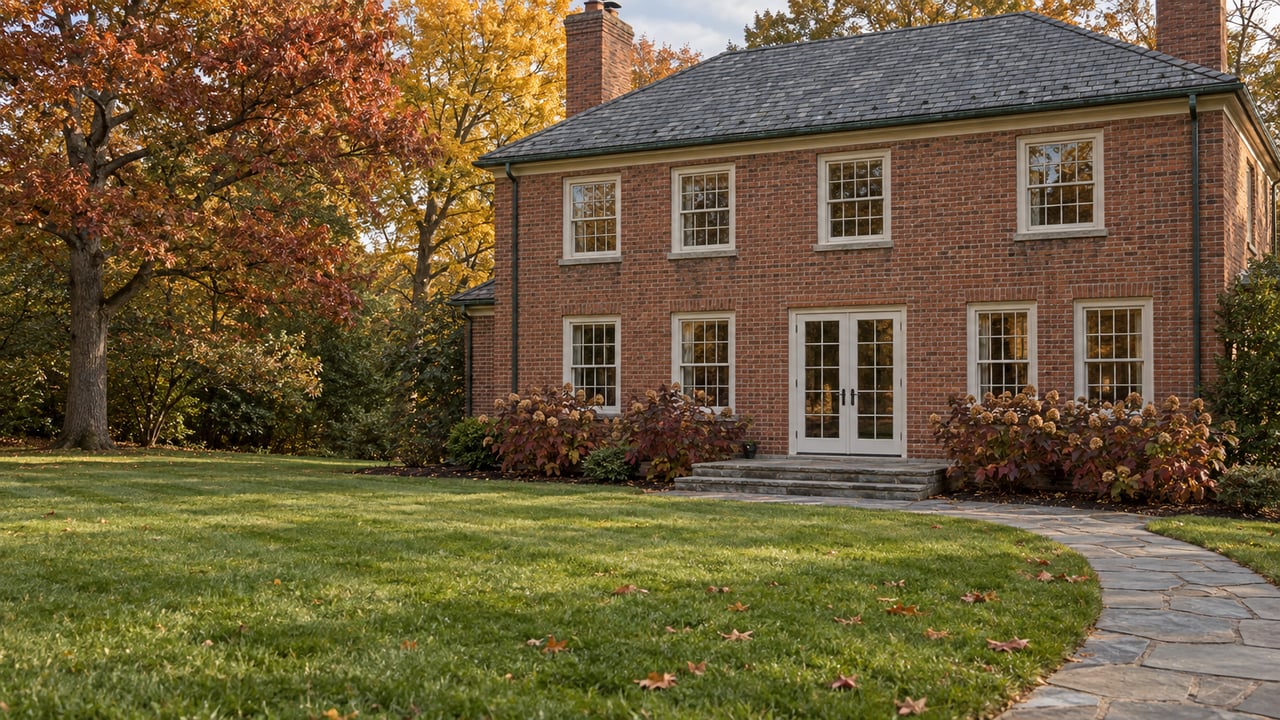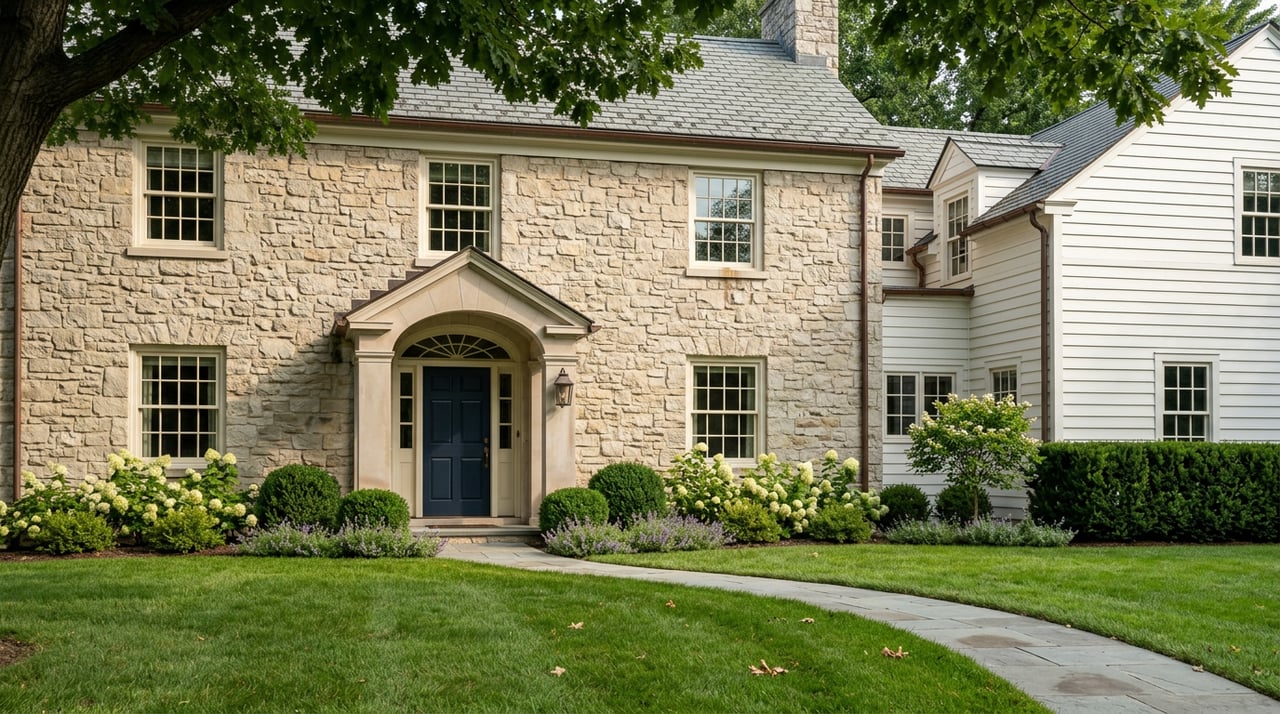
A buyer touring Wellesley this spring will notice something the townwide numbers do not explain. A polished four-bedroom near Linden Square draws multiple offers in under a month. A larger, more expensive home in Cliff Estates sits through two open houses, a price adjustment, and a third weekend before it goes under agreement.
Both are luxury. Both are in the same 6.7-square-mile town. Yet in early 2026 they move on completely different clocks, and the reason has almost nothing to do with quality.
The thesis of this post is straightforward. Wellesley is not one market. It is a stack of neighborhood-specific markets in which the most expensive tier is also the slowest, because those homes are priced on land rather than on square footage. Reading the town median without reading the segment underneath it is the single most common mistake we see buyers and sellers make in 2026.
The velocity gap in one line of data
Realtor.com's January 2026 neighborhood snapshots put the townwide median time on market at 87 days, even while the site still classified Wellesley as a seller's market. That 87-day figure is an average of very different clocks.
| Neighborhood | Median days on market (Jan 2026) | Approx. price per sq ft | Active listings |
|---|---|---|---|
| Linden Square | 33 | $949 | 6 |
| Dana Hall | 57 | — | 7 |
| Wellesley Farms | 58 | $762 | 3 |
| The Fells | 59 | — | 7 |
| Wellesley Square | — | $824 | 2 |
| Wellesley Hills | 93 | $627 | 6 |
| Cliff Estates | 103 | $674 | 5 |
Linden Square clears in roughly a month. Cliff Estates takes more than three. The gap is not incremental. It is a 3x spread inside a single ZIP code footprint.
Note the second column. Linden Square commands the highest price per square foot in town. Cliff Estates, which posted a February 2026 median sale price of $4.315M on four sales, delivers one of the lowest. The most expensive homes by total price are among the least expensive by the foot.
Why the priciest tier is the slowest tier
The pricing mechanism explains the velocity. A buyer paying $949 per square foot near Linden Square is paying for walkability, a defined finish level, and a home that competes directly against a handful of near-identical alternatives inside a small trade area. Those homes are commodity-like in the best sense. A well-prepared listing has a comparable set, a buyer pool that is actively touring, and a decision that gets made quickly.
A buyer paying $4M+ in Cliff Estates is not really buying square footage. They are buying a half-acre-to-acre-plus lot, mature canopy, a specific street, and often a specific renovation vision. Sotheby's advisor data covering 2025 through May 2026 shows Wellesley single-family sales averaging 3,847 square feet and $660 per square foot across 339 closings, but at the estate tier those averages dissolve. Each property is closer to unique than to comparable, and pricing becomes a negotiation between what the seller believes the land is worth and what a narrow, self-selecting buyer pool is willing to underwrite. That negotiation takes time.
The result is counterintuitive but consistent. In Wellesley, higher total price correlates with longer marketing periods, thinner buyer pools, and more room to negotiate. The premium is real. The velocity is not.
What this means when you are writing an offer near the villages
In the walk-to-village tier, price discipline and preparation matter more than negotiation leverage. Linden Square, Wellesley Square, Dana Hall, and The Fells share a pattern in early 2026: single-digit active listings, buyers who have been watching for months, and a strong tendency for well-priced homes to clear at or above ask. Sotheby's advisor data through May 2026 shows offers on Wellesley homes typically secured within 26 days of listing, which is consistent with the 33- to 59-day village-tier medians once due diligence and closing timelines are added.
A buyer competing here should assume shortlist economics. The comparable set is small, the audience is warmed up, and the offer that wins is usually the one with the cleanest terms, the tightest inspection window, and pricing calibrated to the specific block rather than to the townwide median. Waiting for a price reduction on a well-presented home a short walk from Roche Bros, Tatte, or The Cottage is generally not a strategy that pays.
What this means when you are writing an offer in the estate tier
Cliff Estates and Wellesley Hills operate on different rules. The February 2026 Cliff Estates data set covered four closed sales at a median of 113 days on market. When homes take that long to trade, the sale-to-original-list ratio softens, and buyers who prepare their diligence in advance can move on inventory that has been sitting for a season.
That does not make the tier weak. It makes the tier patient. A buyer here is often choosing between a renovated 1920s Colonial on a 25,000-square-foot lot and a 2024 new build on the same street, with a $2M spread in ask. The right offer is neighborhood-specific and lot-specific. Recent Redfin data at the Cliff Estates level shows sharp year-over-year swings (May 2026 median sale $4.12M, up more than 50% YoY) that are almost entirely mix-driven on small sample sizes. Anyone comping this segment off a portal's neighborhood card is going to price wrong. The comps live at the street and lot level.
The direction of the whole market
Underneath the segment differences, one number tells you where Wellesley is heading in 2026. MLSPIN data compiled through early May 2026 shows Wellesley single-family homes selling at a median of 97.84% of their original asking price, down from 99.49% a year earlier. That 1.65-point drop is small in isolation and significant in aggregate: it means more homes are trading below their original list, and buyers have measurably more leverage than they did in the last cycle.
Combine that with the June 2026 median list price of roughly $2.52M and a median of 45 days on market, and the picture resolves. Wellesley is still a seller's market by every conventional definition. It is also a seller's market in which pricing precision matters more than it did in 2023 or 2024, especially at the top of the range where days on market are long and buyer pools are thin.
A pricing sequence that respects the segment
Sellers who treat Wellesley as one market tend to leave money on the table in one of two directions. Village-adjacent homes get priced conservatively against the townwide median and generate a bidding war that would have happened at a higher list anyway. Estate homes get priced aggressively against national luxury peers and sit for a hundred days before a reduction resets the narrative.
A cleaner sequence, one we use with our own sellers:
- Establish the segment before the number. Cliff Estates, Wellesley Farms, Linden Square, The Fells, Dana Hall, Wellesley Hills, Wellesley Square, and Poets Corner each carry their own pace and their own $/sqft.
- Pull comps at the street and lot level, not the neighborhood level. In the estate tier, three comps on the same road tell you more than thirty across the ZIP.
- Set list price against the segment's realistic 45-to-90-day clearing band. In the village tier that is often at or slightly below the tight comps. In the estate tier it is usually a step under the aspirational ceiling.
- Front-load presentation. Staging, photography, and pre-market prep pay back at a higher multiple in Wellesley's slower segments, where a listing has to hold buyer interest across a longer decision arc.
- Reset early if the market disagrees. In this cycle a 30-day check-in on a village-tier listing and a 60-day check-in on an estate-tier listing prevent the stale-listing penalty that shows up in the sale-to-original-list ratio.
Frequently asked questions
Is the Wellesley luxury market slowing? The pace has moderated relative to 2024, and buyers have more leverage than they did a year ago, but the town remains one of Greater Boston's tightest markets. Roughly 42 townwide active listings in January 2026 and a June 2026 median list of $2.52M speak to persistent scarcity, not a broad correction.
Why do portal estimates disagree so much on Wellesley home values? Different models weight recent sales, size, and location differently, and Wellesley's older, highly renovated stock breaks the assumptions built into automated valuations. When one national portal shows a typical value near $1.9M and another shows closer to $2.8M, you are seeing model differences, not market disagreement. Segment-level comps resolve the confusion.
Which Wellesley segment offers the strongest resale profile? Village-adjacent tiers show the most consistent velocity year over year, which supports predictable resale. Estate-tier resale is stronger in absolute dollars but more sensitive to buyer pool depth in any given season. The right answer depends on how long you plan to hold and how flexible your future sale timeline can be.
Should I wait for prices to drop? Wellesley's inventory constraints and school-cycle demand tend to keep the market from correcting broadly. The more actionable question is which segment matches your criteria, and whether your target is currently in a fast-clearing tier or a patient tier. That determines both offer strategy and how much leverage you actually have.
If you are weighing a move up, an estate purchase, or a discreet sale in Wellesley or the surrounding MetroWest corridor, the segment underneath the median is where the real decisions get made. The Lara and Chelsea Collaborative works street by street and lot by lot, and we would welcome the chance to walk you through the numbers behind your specific home or search. Request a Private Consultation to begin.