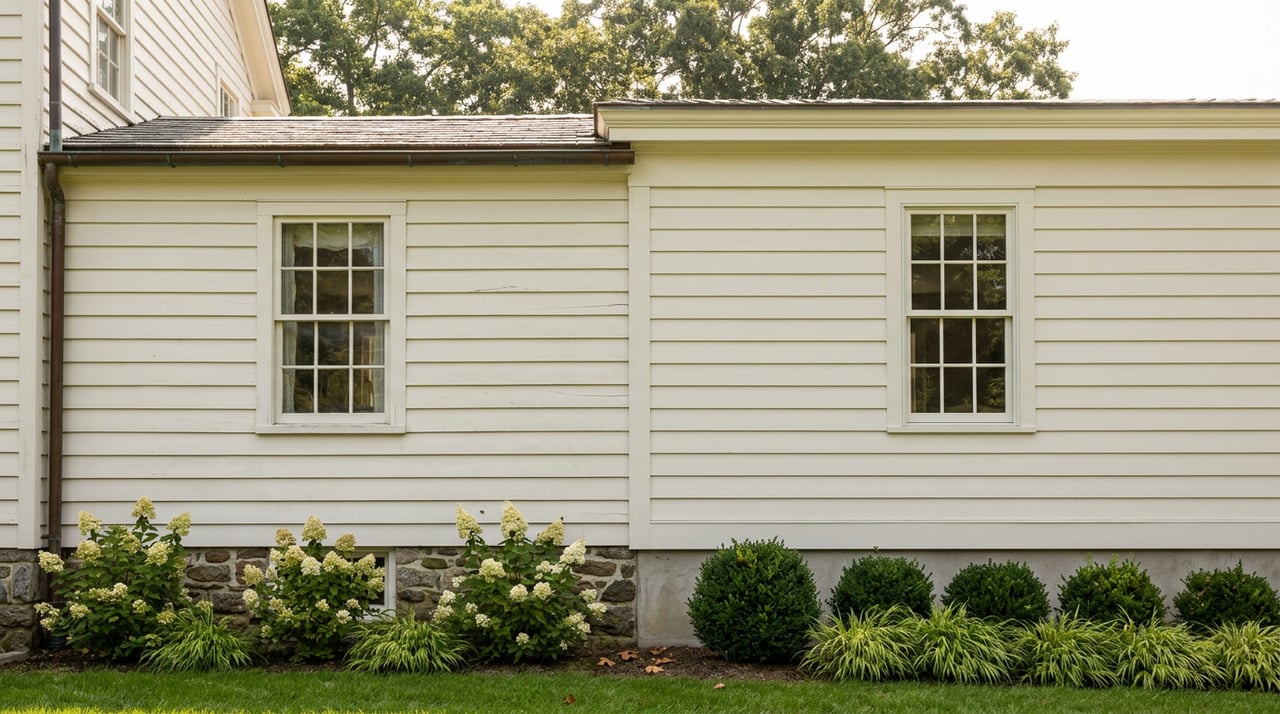
"I told our clients that it would be more complicated to keep part of the existing structure, but we could get started right away."
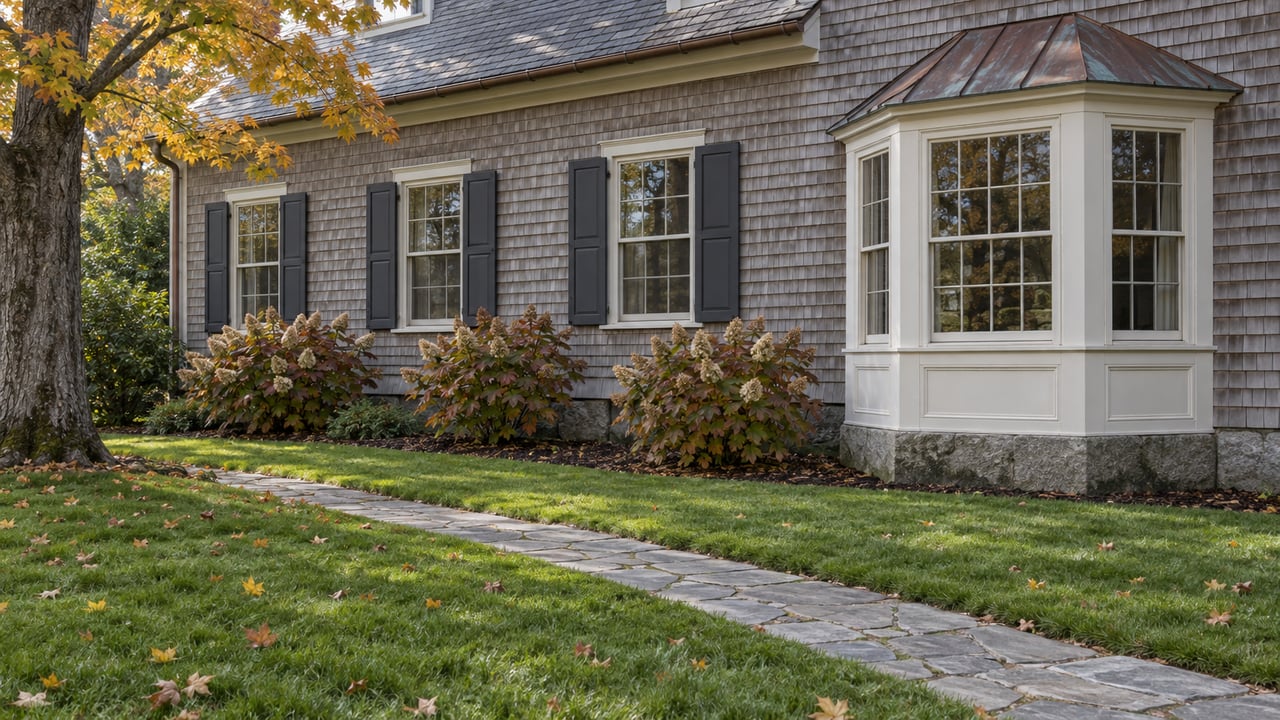
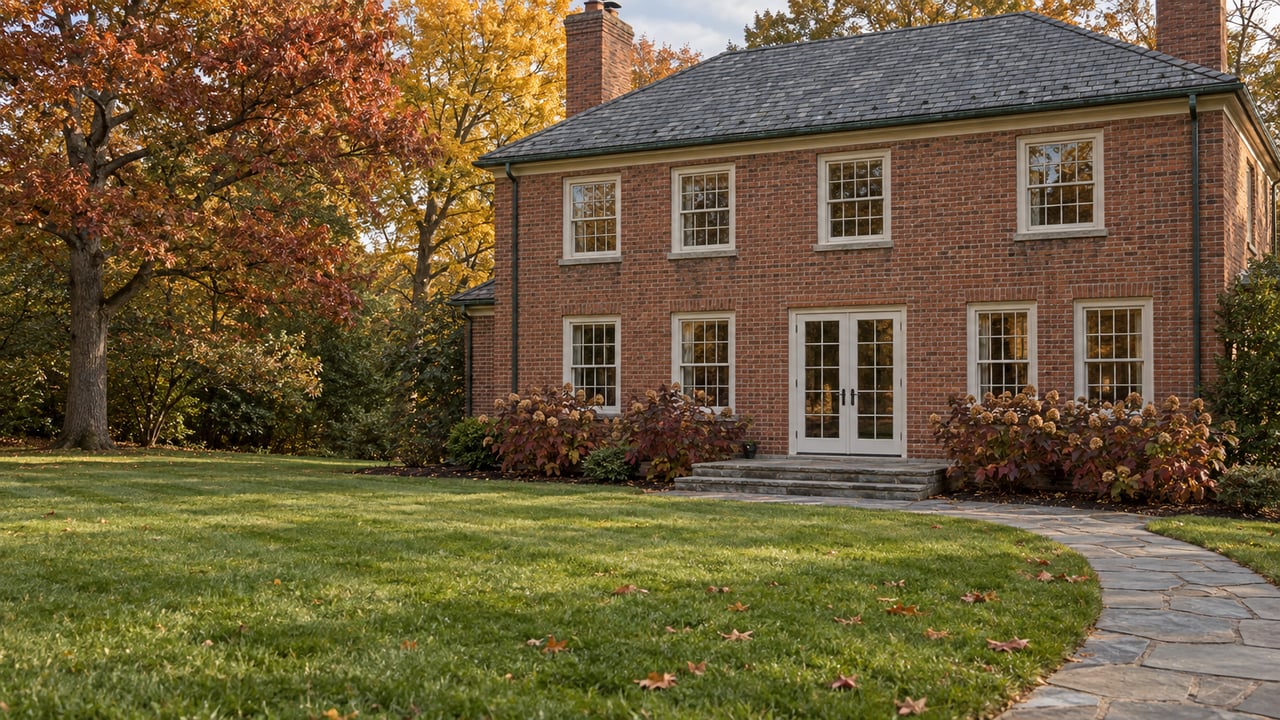
Architect David Stern said this to Boston Magazine about a Wellesley renovation his firm, Stern McCafferty, took on with his business partner and wife, interior designer Diane McCafferty. The lot already held a 1930s center-hall Colonial that the Wellesley Historical Commission had listed as preferably preserved, which meant a full teardown would trigger the town's 12-month demolition delay bylaw, passed in 2017. So the team kept a chunk of the original house and built the clients' program (a terrace, a pool, a pool house with a rooftop deck, a hot tub, a tennis court) around it instead. The project, published in Boston Home's Summer 2026 issue with builder The Lagassé Group and landscape designer Sudbury Design Group, is a genuinely clever way to route around the bylaw everyone in town has heard about.
It also illustrates the bylaw almost nobody mentions in the same breath. Wellesley runs two separate reviews for a major renovation or new build, and they answer to two different boards, on two different triggers, on two different clocks. Knowing about one and not the other is how a buyer's timeline goes sideways.
The clock everyone has heard about
The Historical Commission's demolition review lives in Article 46C of the town bylaws, adopted at the 2017 Annual Town Meeting. An owner applies for an Eligibility Notice, and if the building qualifies, a public hearing is scheduled with the Historical Commission, typically within 45 days of the application. If the seven-member Commission decides the house should be preferably preserved, the town imposes a 12-month delay on any demolition permit. If it decides the house should not be preferably preserved, the applicant is free to proceed.
The fees are modest against a renovation budget. As of a February 2026 update from The Swellesley Report, an Eligibility Notice runs $50 and a full Preservation Determination runs $850, up $50 from 2024. The Commission meets on the second Monday of most months, currently chaired by Michael Racette, and reviews applications one house at a time, in public, with a staff report on each property's architectural and ownership history.
This is the process most people in town can describe in one sentence: old house, twelve months, maybe.
The clock nobody mentions
The second review has nothing to do with age. It belongs to the Planning Board, not the Historical Commission, and it is called Large House Review. The town's Large House Review guidance says a project falls under it when a home's Total Living Area plus Garage Space, known as TLAG, exceeds the threshold set for its zoning district, or when an addition adds 10 percent or more to an existing home's TLAG and pushes the total over that same line.
The thresholds scale with lot size, and Patch reports the figures below; they are the part of this system that almost never makes it into a conversation about the demolition bylaw:
| Property Regulation District | TLAG Threshold |
|---|---|
| 10,000 sq ft | 3,600 sq ft |
| 15,000 sq ft | 4,300 sq ft |
| 20,000 sq ft | 5,900 sq ft |
| 30,000 to 40,000 sq ft | 7,200 sq ft |
A 2022 Swellesley Report piece on a Brook Path renovation confirms the 3,600 square foot threshold for single residence districts still governed the review that year, consistent with the town's own figures. Once a project trips the threshold, it goes to the Planning Board and the Design Review Board, which weigh in on building scale, plantings and lighting, drainage, open space and site circulation, plus an engineering review focused on stormwater. The town's own timeline puts Large House Review at three to four months from submission to building permit. The fee is $2,500 for new construction, prorated for additions, so a 1,000 square foot addition to a 5,000 square foot house works out to roughly $500.
Why the two clocks land on different buyers
Here is the part that reverses the assumption most renovation buyers walk in with. Because the TLAG threshold rises with lot size, the town's largest estate-zoned parcels, the 30,000 and 40,000 square foot districts common in Cliff Estates and Wellesley Farms, get roughly double the square footage runway before Large House Review applies compared to a 10,000 square foot in-town lot. A buyer on one of the grandest lots in Wellesley can often build considerably larger before that clock starts.
Those same buyers, though, are far more likely to be sitting on the kind of pre-1950s Colonial or Colonial Revival that the Historical Commission is built to scrutinize. Their real exposure is the demolition delay bylaw, not Large House Review.
Flip the lot size and the risk flips with it. A buyer trying to maximize square footage on a smaller, closer-in lot faces a home that is statistically less likely to be old enough or architecturally distinct enough to earn a preferably preserved determination, but a much lower TLAG ceiling relative to what they want to build. For that buyer, Large House Review is the clock that actually bites.
Reading only the demolition bylaw, because it is the one with the more dramatic name, means missing which review actually governs your parcel.
What happens when a house sits on both lines
Minutes from the Historical Commission's January 12, 2026 meeting show exactly this pattern playing out in real time. The Commission reviewed 7 Woodcliff Road, a Colonial Revival built around 1933, likely by Wallace Temple, a builder active in the Cliff Estates and Wellesley Farms area, owned by Paul and Phyllis Schnitman since 1982. The Commission voted to deem it preferably preserved and imposed a 12-month delay from that date, running into January 2027.
The same meeting took up 45 Mayo Road, a 1947 Colonial in a neighborhood known as the Fells, once part of the Mayo family farm, built by Ralph and Ethel Porter. Current owner Barton Prives told the Commission he wanted to build a new house on the site, a case that shows the same review reaching a newer generation of owners with plans that echo the same tension the Woodcliff Road case posed.
Age alone does not guarantee that outcome. In separate 2024 and 2025 hearings, the Commission voted not to preferably preserve 1 Kendall Road, a 1930s bungalow, and 46 Upson Road, citing a lack of distinguishing architectural detail in each case. The determination turns on the Commission's read of the specific house, not a birth year cutoff.
How rare is a delay, really
A July 2024 Historical Commission discussion put a number on how often the demolition delay actually lands. Commissioner Mahoney noted that of 560 houses in Wellesley built before 1900, only 19 had gone through the demolition delay process since the bylaw took effect in 2017. Most pre-1900 houses in town, in other words, are never even brought before the Commission for a demolition determination, whether because owners aren't proposing demolition or because the process simply hasn't reached them yet.
That is not an argument for ignoring the bylaw. It is an argument for testing early rather than guessing. A house doesn't need to look historic to qualify for review, and the only way to know your actual exposure is to file for an Eligibility Notice before you are deep into architectural drawings.
A sequencing move that saves months, not fees
The town's own guidance on the demolition bylaw notes that Large House Review and the Historic Preservation Demolition Review can proceed concurrently. The real risk isn't a calendar collision, since the town explicitly allows both tracks to run at once. It is a design collision. If a Large House Review submission gets drafted before the Historical Commission weighs in on what portion of an existing structure must survive, that submission may need to be redrawn once the preservation determination lands, restarting the Planning Board clock.
A sequence that avoids that outcome, for a buyer or seller working through a major renovation:
- Confirm the property regulation district and its TLAG threshold before finalizing a target square footage, so the design team knows the ceiling from day one.
- File for an Eligibility Notice on any home approaching or past the middle of the last century, before signing a purchase and sale contingency that assumes a fast start.
- If eligibility looks likely, get the Historical Commission hearing scheduled first, since its outcome (how much of the existing structure needs to remain, and where) shapes what a Large House Review submission should even propose.
- Budget the full fee stack, $50 and $850 for the demolition review, $2,500 or a prorated share for Large House Review, as predevelopment cost, not construction cost.
A short FAQ
Does a house have to look historic to be reviewed under the demolition bylaw? No. The Historical Commission has voted against preferably preserving houses that met the bylaw's general eligibility, including a 1930s bungalow at 1 Kendall Road and a home at 46 Upson Road, both found to lack distinguishing architectural or historical significance in the Commission's own review.
A renovation or teardown in Wellesley is rarely a single approval. It's two boards, two triggers, and a design that has to satisfy both before a building permit is anything more than a plan on paper. The Lara and Chelsea Collaborative works through this sequencing with clients before an offer goes in, not after. If you're weighing a renovation, addition, or teardown on a specific Wellesley address, request a private consultation and we'll help you read the actual clock your property is on.
This article is general information, not legal, tax or financial advice. Consult a qualified professional about your situation.