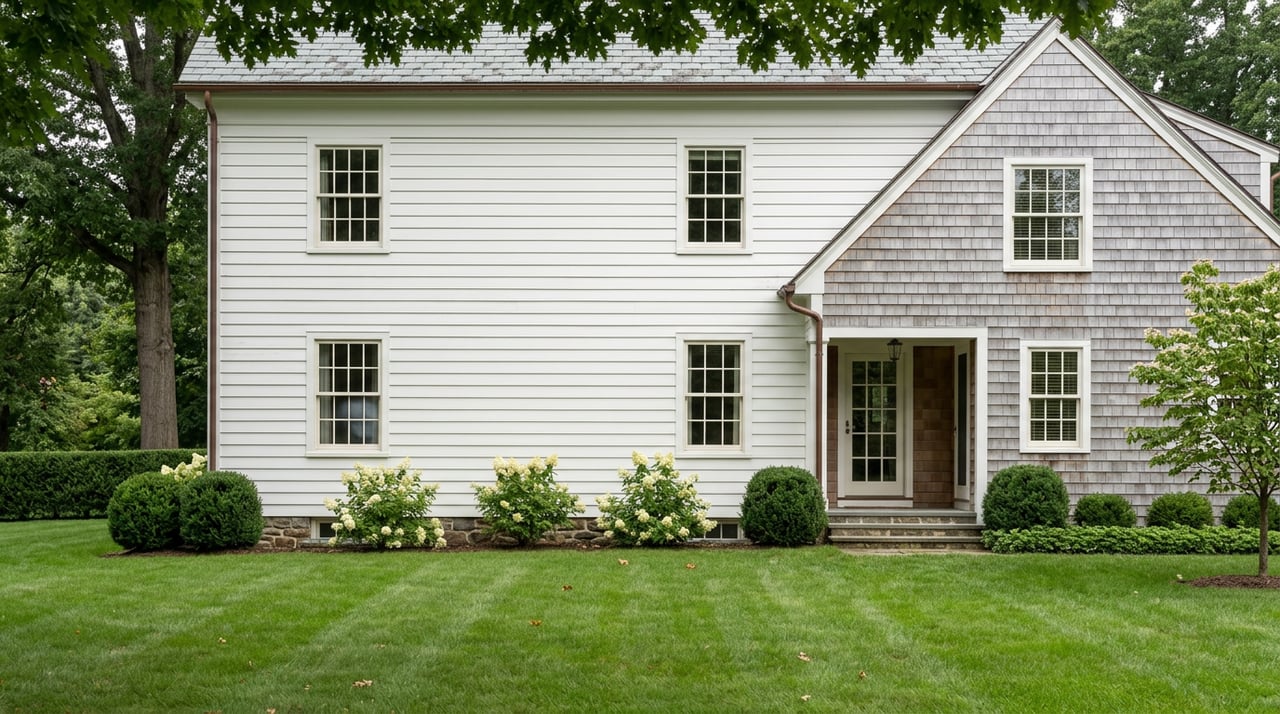
Sellers moving between Wellesley and Weston often assume the two transactions look the same. They do not. Wellesley closings run through a municipal sewer connection that most owners never think about. Weston closings run through a septic tank in the yard, and that single infrastructure difference reshapes how a Weston sale is priced, timed, and negotiated.
The distinction is not anecdotal. In a memo to residents, the Weston Board of Health confirmed in writing that Weston is not part of the MWRA Sewer Program and cannot tie new services into the existing sewer line. In practical terms, that means virtually every single-family transfer in Weston involves an on-site subsurface disposal system and, by state law, a Title 5 inspection before the deed changes hands.
The thesis of this piece is simple. In Weston, Title 5 is not a contingency you negotiate around during a deal. It is a baseline event on every listing, and the sellers who treat it as step one of the marketing plan, not a mid-transaction surprise, are the ones who preserve both price and closing schedule.
Why the state rule bites harder here than in most towns
Title 5 is the Massachusetts Environmental Code governing on-site sewage disposal. State guidance is explicit: a passing inspection is required within two years before a sale, or three years if the seller can produce annual pumping records, and the report must be delivered to the buyer, per MassDEP's guide to buying or selling property with a septic system. In a town where roughly half of homes are on public sewer, only half of listings trigger the rule. In Weston, the trigger rate approaches one hundred percent.
That changes seller behavior in two ways worth naming up front. Inspection scheduling is not a "when the buyer asks for it" line item, because the timeline is yours to control before the buyer ever appears. And the town's Board of Health, reachable at 11 Town House Road, sits inside the transaction on a fraction of Weston deals that would not happen at all in a sewered town.
The three outcomes, and what each does to your close date
An inspection can end in one of three ways, and each carries a distinct set of consequences:
- Pass. The report is valid for two years from the date of inspection, or three years if annual pumping is documented on or before each anniversary. A pass early in the listing period gives you a marketing asset that outlasts most price adjustments.
- Conditional pass. The system meets standards once specified repairs are completed. Repairs can range from a single crushed pipe fix in the low four figures to a distribution box replacement. The Board of Health confirms compliance after the work is done.
- Fail. The system must be repaired or replaced. If the homeowner is not selling, MassDEP allows up to two years to complete the work. If the property is under agreement, the timeline compresses to the closing date, or the parties restructure the deal.
The point of separating these outcomes is that the seller controls which one shows up in the buyer's inbox. Order the inspection before the sign goes up, and a conditional pass becomes a scheduling problem you solve in your own time. Order it after an offer is accepted, and the same conditional pass becomes a leverage point for the buyer's attorney.
When a failure lands mid-deal
The mechanics of a failed system inside a live transaction are worth understanding in detail, because this is where Weston deals most often derail.
There are two workable paths. First, the seller completes the repair or replacement before closing with a full sign-off from the Weston Board of Health. This is generally the cleanest path for everyone, particularly for the buyer's lender. Second, the parties agree to an escrow holdback covering the work plus a contingency reserve, and the installation happens after closing. Massachusetts practice typically sizes that holdback at roughly one and a half times the average of the repair estimates. On a system a contractor estimates at $25,000, that means holding back closer to $37,500. Not every mortgage lender permits septic holdbacks at all, which is why the escrow route sometimes collapses when the buyer's financing letter comes back.
Replacement cost ranges in this market are wide. Massachusetts practitioners commonly cite a range from about $10,000 for a straightforward gravity system to $50,000 or more when soil conditions, water table, or ledge push the design toward an Innovative/Alternative technology. Weston lots run into all three complications, which is why the top of that range gets used more often here than in flatter suburbs.
The bedroom-count trap on renovated estates
Weston's active teardown-and-rebuild market intersects with Title 5 at a specific pressure point: the number of bedrooms. Title 5 sizes design flow at 110 gallons per day per bedroom. A four-bedroom Colonial renovated into a six-bedroom estate has a design flow that jumps from 440 to 660 gallons per day, and the existing tank and leach field may not be permitted to handle it.
Pre-sale renovations that add bedroom count are the ones that most often surprise Weston sellers at closing. A building permit for a new bedroom triggers a Board of Health review of septic capacity before the certificate of occupancy issues. If the existing system is undersized, the town controls the sign-off. Sellers running a pre-market renovation should confirm design flow against the existing plan on file before framing begins, not after.
The wetlands overlay
Weston's landscape adds one more variable most towns do not. The Board of Health's own regulations require septic components to sit at least 100 feet from bordering vegetated wetlands, and the town's meeting record is full of variance requests for systems that fall between 50 and 100 feet. A May 2023 Board of Health approval on Rockport Road, for example, granted exactly that variance for a six-bedroom design engineered by Alpha Omega Engineering.
When a Weston replacement design requires a variance, the timeline stretches. Public notice to abutters, a hearing on the Board of Health's calendar, and, in some cases, an additional 90-day window if a state variance from MassDEP is also needed. A design on a clean, upland lot can go from perc test to permit in weeks. A design on a wetland-adjacent parcel routinely takes a full season. That reality should shape when you schedule your first conversation with an engineer, not the day you list.
A pre-listing sequence that shortens the close
For a Weston seller, the practical order of operations looks like this:
- Pull the septic file at the Weston Health Department. Confirm the bedroom count on the last approved plan matches the bedroom count you plan to market.
- Schedule a Title 5 inspection with a licensed inspector who does not also install systems. Independent inspectors like Curtis Septic, Berl Engineering, and SewerMan work regularly in Weston; the separation avoids the incentive problem of the same firm diagnosing and quoting the fix.
- If the inspector flags a conditional pass, get two or three repair estimates. Local firms with a Weston track record include EmRay Excavating and Clearwater Contracting.
- If a full replacement is likely, retain a design engineer early. Stamski & McNary and Alpha Omega Engineering are frequently named in Weston Board of Health approvals, which shortens the review learning curve.
- Keep pumping records annually. That single habit converts a two-year inspection into a three-year one and gives your next buyer breathing room.
Sellers who complete steps one and two before the listing photos are taken almost never see a septic issue surface as a renegotiation lever after the offer.
Frequently asked questions
Does an off-market or private sale skip the Title 5 requirement? No. The state rule attaches to the ownership transfer, not the listing method. Off-market sales, family transfers, and most trustee transactions all trigger the inspection. A narrow set of exemptions exists for refinances, certain estate-planning transfers, and enforceable Board of Health upgrade agreements, as detailed in the MassDEP guide linked above.
What if the weather prevents a proper inspection near closing? Title 5 allows the inspection to be completed up to six months after the sale in that specific circumstance, provided the seller notifies the buyer in writing of the deferred obligation. In practice, buyers' attorneys resist this structure, and it should be treated as a fallback, not a plan.
Does an inspection guarantee the system will keep functioning? No. The inspection determines whether the system, in its current condition, protects public health and the environment. It does not warrant future performance, which is why sophisticated Weston buyers often pair the Title 5 report with their own private assessment before removing contingencies.
Weston is a town where infrastructure sits in the yard, not under the street, and the sellers who plan their listing around that fact almost always close faster and cleaner than the ones who inherit it as a surprise. If you are considering a sale in the next twelve months and want a preparation plan built around your specific system, plan, and lot, The Lara and Chelsea Collaborative welcomes a private conversation. Request a Private Consultation.