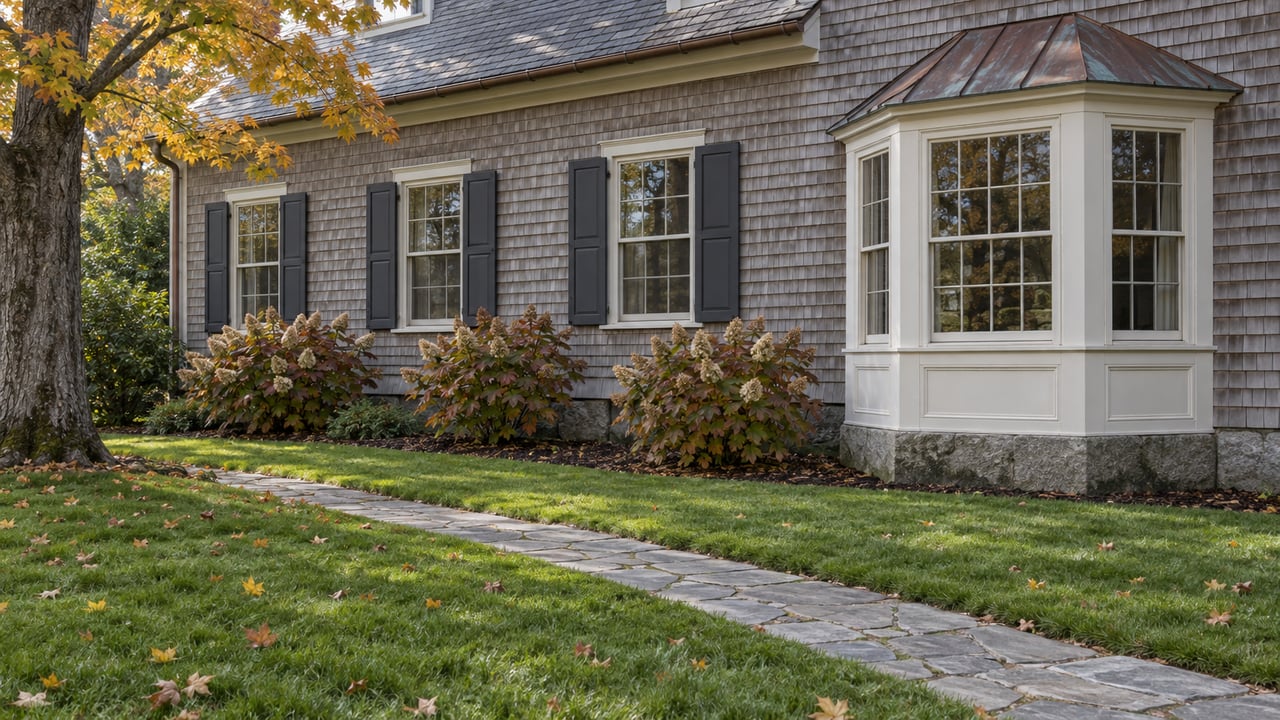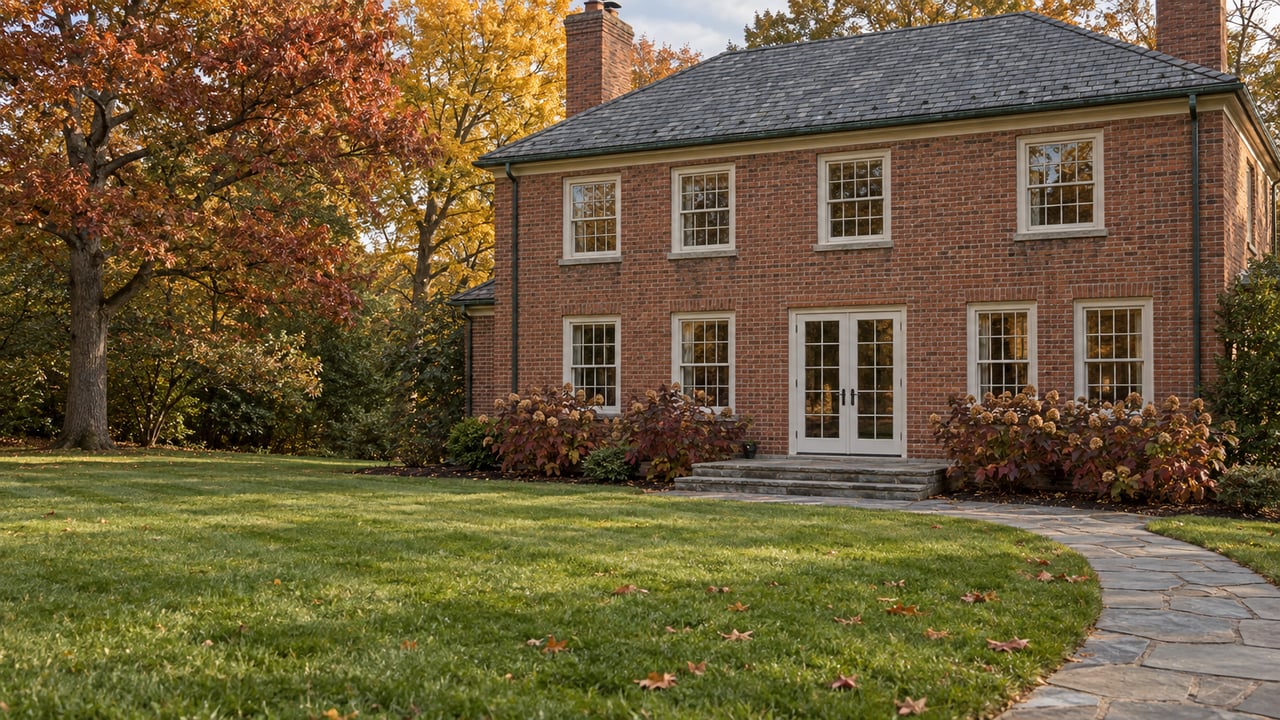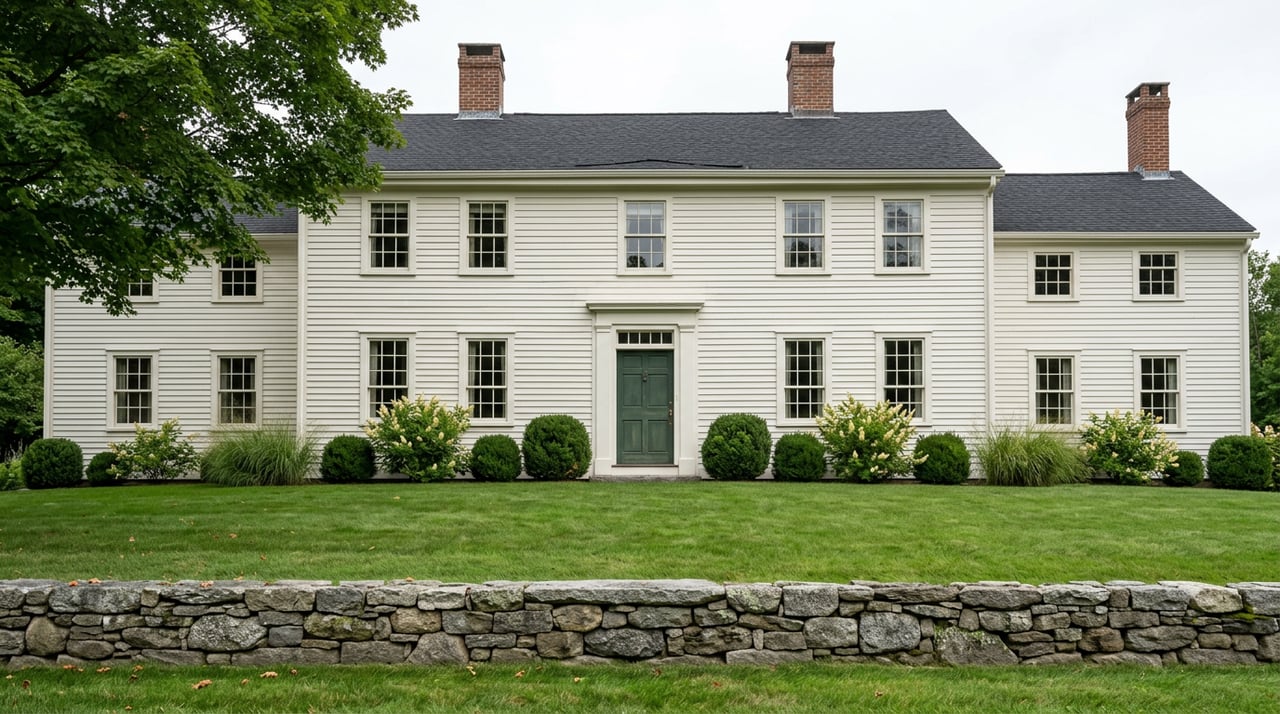
A family with a $2.6 million budget spends a Saturday touring Wellesley, then drives fifteen minutes west to tour Weston the following weekend. On paper, the two towns look like the same product in different packaging: leafy, affluent, good schools, a reasonable commute into Boston. The listing agents quote similar numbers. The family assumes they're comparing apples to apples.
They aren't. And the gap between what looks true and what's actually true is the whole story.
The Number That Doesn't Add Up
Start with the headline prices. Wellesley's single-family homes averaged $2.56 million across 82 closed sales year to date in 2026, up from $2.34 million the year before, according to one recent market report pulling from MLS PIN data. Weston, over the three months ending in May 2026, posted a median sale price of $2.7 million, up 12.7 percent year over year. So far, that tracks with everyone's assumption: Weston costs more.
Then look at price per square foot, and the story flips. Wellesley's current tracking puts that figure at roughly $666 per square foot. Weston's runs lower, around $628. The town with the higher sale price is, per square foot, the cheaper one.
That's not a rounding error. It's a real and repeatable gap, and it means the two towns aren't selling the same thing at different prices. They're selling different things, and the price tag on each is doing something the average buyer never bothers to unpack.
Two Different Products Wearing the Same Price Tag
Here's what actually explains it. Wellesley and Weston write their zoning codes around two different ideas of what a single-family lot should be, and that decision, made by each town's meeting body years ago, still governs what a buyer's money converts into today.
Wellesley's own zoning district reference table shows its tightest single-residence district, known as SR10, permits lots as small as 10,000 square feet, about a quarter acre, and that district alone covers 21.6 percent of the town's land. Its next tier up, SR15, adds another 10.5 percent of town land at a slightly larger minimum. Add it up and roughly a third of Wellesley is built for houses on lots you could walk across in under a minute.
Weston's zoning requirements read differently from the first page. Its Single Family Residence Districts A through D set minimum street frontage of 200 feet, 150 feet, 125 feet, and 100 feet, in descending order by district. That's frontage alone, the width of the lot at the street, before you even reach depth. Run the math on the largest of those four districts and a lot with 200 feet of frontage and even a conservative 200 feet of depth already covers roughly 40,000 square feet, close to an acre, and roughly four times Wellesley's smallest permitted lot. Weston's 3A MBTA Multifamily Zoning page confirms that single-family use is effectively the only by-right option across those same four districts, which cover most of the town's residential land.
| Town | Zoning Detail | What It Requires |
|---|---|---|
| Wellesley | SR10 district (21.6% of town land) | 10,000 sq ft minimum lot, about a quarter acre |
| Wellesley | SR15 district (10.5% of town land) | 15,000 sq ft minimum lot |
| Weston | District A | 200 ft minimum street frontage |
| Weston | District B | 150 ft minimum street frontage |
| Weston | District C | 125 ft minimum street frontage |
| Weston | District D | 100 ft minimum street frontage |
That's the mechanism. A Wellesley buyer's $2.6 million is chasing a smaller pool of legally possible land, so more of the price gets absorbed by the structure itself, the finishes, the renovation, the walk to the village. A Weston buyer's $2.6 million is chasing land the town has legally mandated to be larger, so a bigger share of that number is paying for acreage rather than square footage inside the house. Divide price by house size and Weston looks cheaper. Divide price by land and the comparison would likely run the other way. Neither town is a better deal. They're measuring different things and calling it the same metric.
For context on the character this produces at scale, the Wellesley-based housing advocacy group Building a Better Wellesley calculated that as of 2024, 82 percent of the town's buildable residential land is zoned exclusively for single-family homes, but under bylaws that still allow those smaller lot minimums. Weston's frontage requirements push toward the same single-family-only outcome through a different mechanism: wider lots by default rather than a legal ban on anything else.
What This Means When You're Actually Touring Houses
If you're the buyer standing in a Weston kitchen wondering why the per-square-foot number felt like a bargain compared to the Wellesley house you saw last week, this is why. You are not getting a discount. You are getting less house relative to the number on the sign, because the town has decided the number on the sign has to buy more dirt.
This also explains something buyers notice but rarely trace to its source: the pace of the two markets doesn't move the same way. Wellesley's year-to-date report shows single-family homes selling at an average of 100.9 percent of list price, averaging 33 days to offer across those 82 transactions, a fairly steady rhythm. Weston is choppier. Closed sales over the three months ending in May 2026 averaged just 24 days on market. But a separate snapshot of Weston's currently active listings, updated in early June 2026, put the median time already on market at 44 days, with the spread between new listings and stale ones far wider than what Wellesley's numbers show.
That inconsistency isn't a market flaw. It's a byproduct of the same zoning structure. Wellesley's smaller, more uniform lots produce a more homogenous product that a broader pool of buyers can evaluate quickly. Weston's larger, wider-frontage parcels are each their own animal, different topography, different tree cover, different distance from the road, and that variety means each one waits for the specific buyer who wants exactly that lot. When that buyer shows up, the house moves fast. When they don't, it sits.
The Trade You're Actually Making
None of this means one town is the smarter buy. It means the decision isn't really about price per square foot at all. It's about what you want a large sum of money to convert into.
Wellesley trades land for proximity. A smaller lot means a shorter walk to the village center, to the commuter rail, to a coffee shop on a Tuesday morning. The zoning code that permits quarter-acre lots is the same code that keeps the town walkable in a way Weston, by design, is not.
Weston trades proximity for privacy and scale. The frontage minimums exist because the town decided, decades ago, that space between neighbors mattered more than a five-minute walk to a storefront. That decision still shows up in every closing today, in the form of a lower price per square foot that has nothing to do with the house and everything to do with the lot beneath it.
For a relocating family choosing between the two, the useful question isn't "which town's homes cost less per square foot." It's "which zoning code produces the lot I actually want to live on." Once that's answered, the price comparison stops being confusing and starts being informative.
A Few Questions Worth Asking Before You Choose
Does Weston's lower price per square foot mean I'm getting a better deal? Not necessarily. It means more of your purchase price is going toward land rather than living space, because Weston's zoning requires more of it. Whether that's a better deal depends on whether you value the acreage.
Are these zoning rules likely to change soon? Both towns' zoning by-laws are public documents, adopted and amended through town meeting votes, and they've held their basic residential-district structure for years. Any relocation timeline should treat current requirements as the operating reality rather than something in flux.
Should I compare the towns using median price instead? Be cautious here too. Town-wide medians often blend single-family homes with condominiums, and Wellesley in particular has a meaningful condo market that can pull a blended median well below what a single-family buyer will actually pay. Ask for single-family-only figures when comparing.
If you're weighing Wellesley against Weston with a specific budget in hand, the zoning code will tell you more about what that budget actually buys than any price-per-square-foot chart ever will. The Lara and Chelsea Collaborative works both markets from the inside, estate by estate and lot by lot. Request a Private Consultation and we'll walk you through what your number converts into in each town before you write an offer.
This article is general information, not legal, tax or financial advice. Consult a qualified professional about your situation.