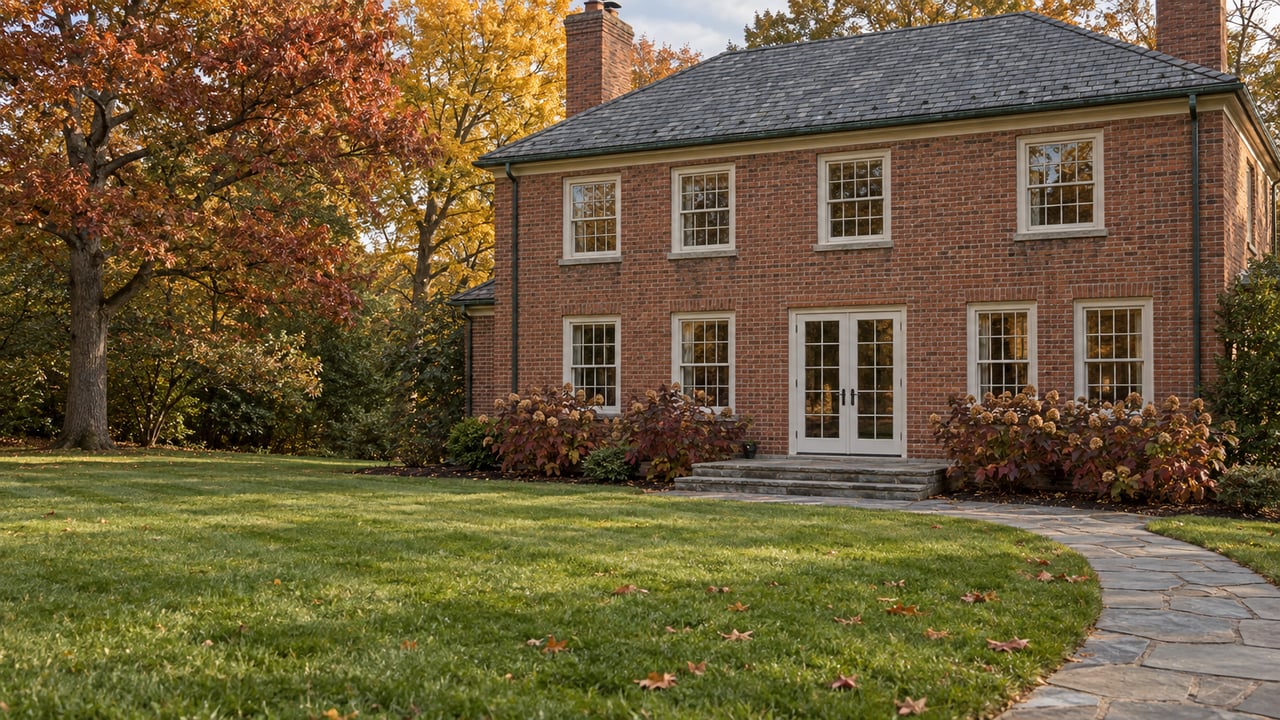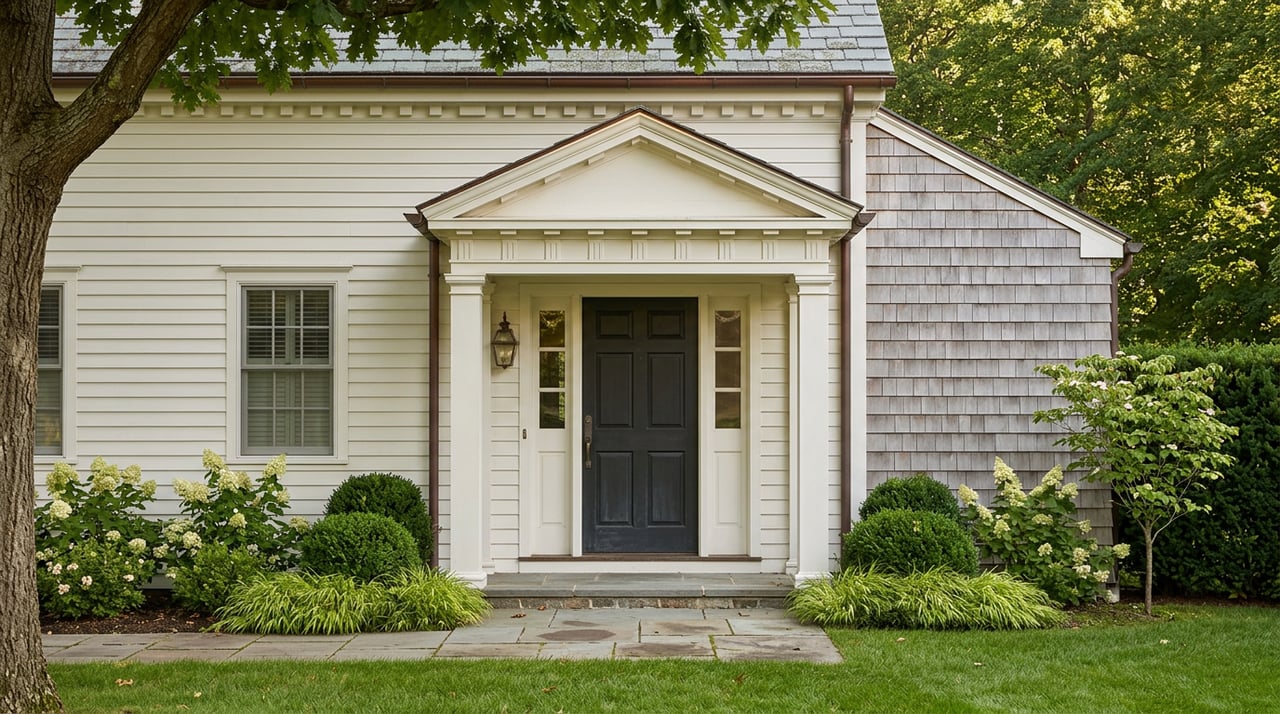
Most buyers arrive at a Weston estate with the reno budget already sketched: new windows, a rear addition, a re-shingled ell, maybe a footprint bump on the garage wing. Then a title search flags a pre-1945 build date and a Cultural Resources Inventory listing, and the schedule starts to move.
The by-law will not stop the project. Almost nothing does. What it does is reprice the calendar, and the calendar is where most Weston renovation deals actually strain.
The number that matters is not twelve
The headline figure is a twelve-month maximum delay after a "Preferably Preserved" finding, imposed under Article XXVI of the Weston General By-Laws. The Weston Historical Commission's own published guidance says demolition delays are seldom imposed and, when imposed, rarely run the full twelve months. Most partial demolitions are finalized at the initial public hearing.
The number that actually matters is the definition of "significant." Any building constructed in whole or in part by 1945, or of unknown age, is potentially in scope if it sits inside a National Register area, is included in the 1993 to 1994 Historical Resources Survey, or has a Cultural Resources Inventory form on file. In a town where a large share of the estate-scale inventory predates 1945, the default assumption on an older home should be that the Commission gets a look.
The four district and area layers below are the second review track. A property inside one of them may be subject to the general delay by-law, an additional local commission review, or both.
| Historic layer | Review body | What it captures |
|---|---|---|
| Boston Post Road National Register District | Weston Historical Commission | Corridor properties along Route 20 |
| Kendal Green National Register District | Weston Historical Commission | Late 19th and early 20th century estates near the depot |
| Case's Corner Historic District | Weston Historical Commission | Homes around the Maple Road and Wellesley Street intersection |
| Crescent Street Historic District | Crescent Street Historic District Commission | Exterior modifications inside the district |
| Maple Road–Wellesley Street Historic Area | Weston Historical Commission | Adjacent estates outside Case's Corner |
"Partial demolition" is where the surprise lives
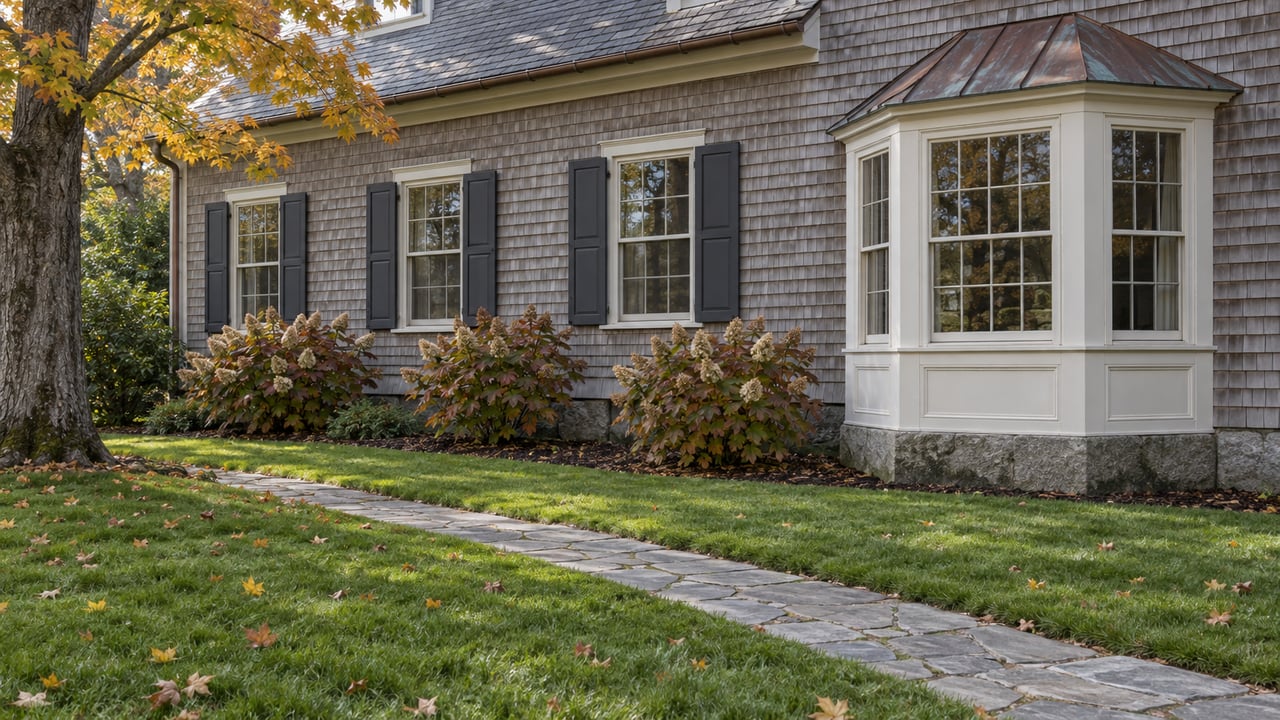
The word "demolition" reads as a wrecking ball. The by-law does not. Partial demolition, as the Commission defines it, includes changes to windows, siding, and trim, along with additions and other exterior remodeling. Particular attention is given to changes visible from the street. Landscaping is not reviewed.
That is the sentence that catches renovation buyers. A window replacement package on a c.1910 shingle Colonial is a partial demolition. Re-siding a front elevation with a different profile is a partial demolition. A rear addition that changes rooflines is a partial demolition. Each requires an application through the Building Inspector, which then triggers the Commission process for any pre-1945 building.
The 64 Wellesley Street review, a c.1926 Colonial Revival built for the caretaker of the Winsor Estate inside Case's Corner Historic District, gives the flavor. The scope included rebuilding a more recent addition with a different roofline, replacing all windows with wood two-over-one double-hungs, and re-siding portions in cedar clapboard. All of it went to a public hearing. All of it was ultimately resolvable. None of it happened on a builder's original schedule.
The clock, in business days
The procedural timeline is set by statute, not by the Commission's discretion. For a renovation buyer trying to sequence a construction start against a closing date, the following windows are what govern:
- The owner files a Demolition Application at the Building Inspector's office in Town Hall.
- If the building predates 1945, the Historical Commission is notified.
- Within 21 business days of receipt, the Commission holds an initial determination meeting.
- If the building is found significant, a noticed public hearing is scheduled within 30 days, with newspaper notice published twice and mailed notice to every abutter within 300 feet.
- Most partial demolition matters resolve at that public hearing.
- If they do not, and the Commission votes the building "Preferably Preserved," a delay of up to twelve months attaches to the building permit for the scope in question.
Read realistically, a routine partial demolition on a listed pre-1945 property adds roughly two to three months to a permit path. A contested one adds a year. The delta between those two scenarios is almost entirely a function of how the application is prepared and whether the applicant has engaged with the Commission before filing.
The five-year cliff nobody prices in
Buried in the Historic Heritage Overlay District language sits a provision most buyers never see. If a contributing structure is determined to have been allowed to deteriorate through neglect beyond the practical ability to reconstruct it, the site faces an automatic prohibition against new or replacement construction of any kind for a minimum of five years. After that, any proposed structure is subject to Special Permit and Site Plan Review.
The 770 Boston Post Road matter, involving the 1892 Colonial Revival Lorenzo N. Kettle House designed by Weston architect Samuel Mead, illustrates the trajectory. A demolition delay was imposed in 2015 and expired. A front section of the roof later caved in. When the property returned to the Commission in 2020, members raised the question of whether the deterioration itself might constitute demolition by neglect, and a structural evaluation was commissioned to determine salvageability before any new delay decision was finalized.
For a buyer acquiring a distressed pre-1945 estate with the intention of scraping it, the risk is not that the by-law will stop the plan. The risk is that the site's history of neglect, as read by the Commission, could pull the redevelopment window from twelve months to five years.
A pre-offer sequence that keeps the schedule
The friction described above is manageable, but only if the diligence order gets reversed from the usual pattern. Most buyers order a structural inspection first, then a builder's walkthrough, then think about historic review after signing. On a pre-1945 Weston property, that sequence is backwards.
- Confirm construction date and whether the property appears on the Weston Cultural Resources Inventory before making an offer.
- Identify whether the parcel sits inside any of the five district or area layers listed above.
- Ask the seller for any prior Commission correspondence, prior demolition applications, or expired delays. Prior findings do not carry forward, but the paper trail signals how the Commission has read the property before.
- Have the intended scope reviewed by a preservation-fluent architect against the by-law's "partial demolition" definition before signing a purchase and sale, not after.
- Build the Commission timeline into the construction schedule at the front end. A twenty-one business day initial determination plus a thirty day hearing is a routine addition. Assume it.
Done in this order, a pre-1945 Weston renovation project rarely loses a season. Done in the usual order, it often does.
Frequently asked questions
Does the by-law apply if the house is not on the National Register?
Yes. National Register status is one of three qualifying criteria. Inclusion in the 1993 to 1994 Historical Resources Survey or documentation on a Cultural Resources Inventory form is enough, provided the Commission votes the building significant.
Does a "Preferably Preserved" finding stop a demolition permanently?
No. The by-law cannot ultimately prevent demolition, even of a building listed on the National Register. The maximum consequence is a twelve month waiting period from the date of the finding.
Are interior renovations reviewed?
No. The Commission reviews exterior work. Interior scope is outside its jurisdiction, though the underlying building permit still runs through the Building Inspector.
What triggers "demolition by neglect"?
A Commission determination that a contributing structure inside the Historic Heritage Overlay District has been allowed to deteriorate beyond practical reconstruction. The consequence is a minimum five year prohibition on new or replacement construction on the site, with any subsequent proposal subject to Special Permit and Site Plan Review.
If you are evaluating a pre-1945 Weston property with a renovation or teardown plan, the diligence order is the difference between a summer construction start and a lost year. The Lara & Chelsea Collaborative works this map every week, from Kendal Green to Case's Corner to the estates along Boston Post Road, and structures offers around the Commission calendar rather than into it. Request a Private Consultation to walk your target property through the sequence before you sign.