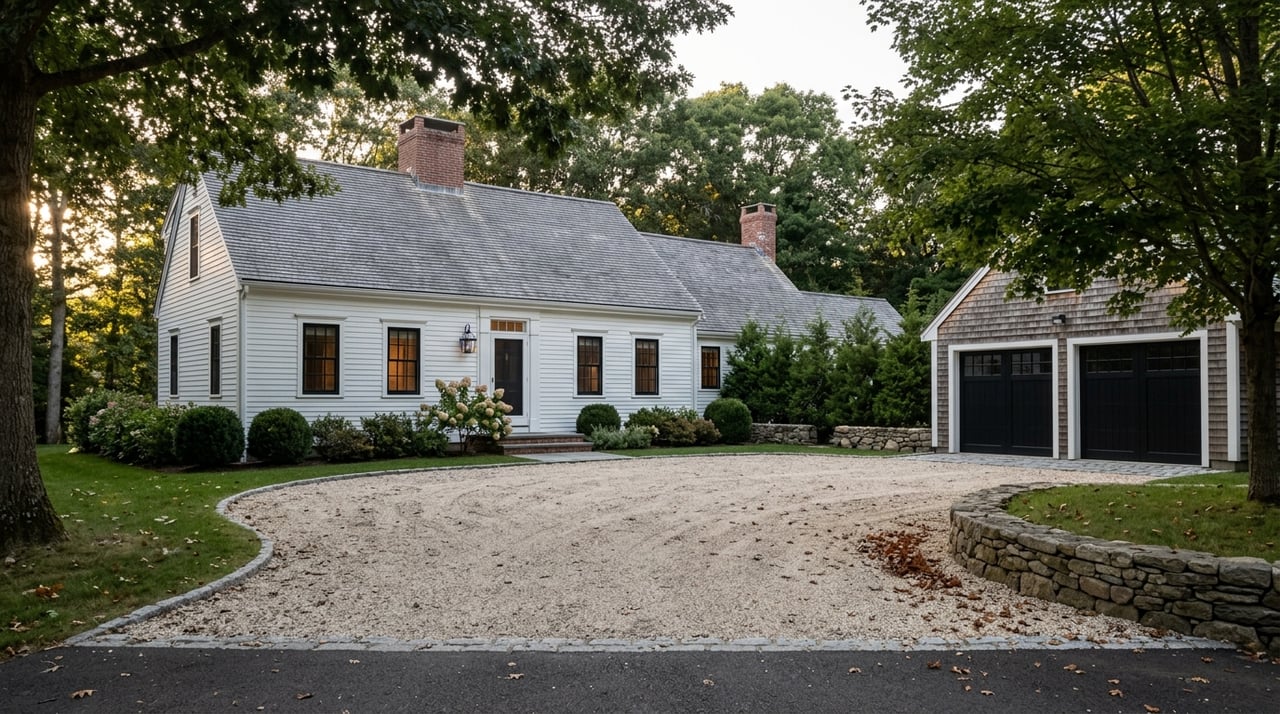
If you are shopping for luxury real estate in Weston, it helps to know that not every $3 million home is competing with every other $3 million home. In a town shaped by large lots, low-density zoning, open space, and distinct historic and scenic-road pockets, value often changes from one micro-market to the next. When you understand how Weston’s smaller submarkets work, you can compare homes more accurately, move with more confidence, and protect your long-term resale position. Let’s dive in.
Why Weston works differently
Weston is a small, low-density town where land matters as much as the house itself. The town’s housing framework is intentionally designed to preserve its semi-rural character, with single-family lot requirements ranging from 20,000 to 60,000 square feet and very limited land zoned for multifamily use.
That matters because luxury pricing in Weston is not just about finishes, square footage, or age. It is also about privacy, lot usability, setback patterns, open space, and whether a property sits in a micro-market with a clear identity. Weston also has 3,287 acres of open space and recreation land, which reinforces the town’s low-density feel.
Infrastructure plays a role too. Weston has no public sewer, so septic capacity, lot geometry, and setback rules can directly affect renovation potential and future expansion. For buyers, that means due diligence should go beyond the house itself.
Start with the right market data
One of the easiest ways to get confused in Weston is to mix listing metrics with sold metrics. Recent snapshots show different numbers depending on the source, which is normal, but only if you understand what each one is measuring.
Redfin’s sold-data snapshot for May 2026 shows a median sale price of $2.698 million, 24 days on market, and a 97.4% sale-to-list ratio. Zillow’s typical home value sits at $2.29 million, while Realtor.com’s listing snapshot shows a $3.612 million median list price.
The takeaway is simple: compare like with like. Sold comps should be measured against sold comps, and current inventory should be measured against current inventory. In a town like Weston, that matters even more because the real competition set is often the micro-market, not the whole town.
What a Weston micro-market means
A micro-market is a smaller pocket within town where buyer priorities, housing style, lot patterns, and tradeoffs tend to repeat. In Weston, a historic home near the town core, an estate setting in South Weston, and a scenic-road Colonial in Silver Hill may all appeal to different buyers, even at similar price points.
That is why broad townwide numbers only tell part of the story. The better question is not just, “What is Weston doing?” but “What kind of Weston property am I buying, and who else will want it later?”
Boston Post Road and Weston Center
Best for access and historic character
Boston Post Road is Weston’s historic east-west spine and runs about 3.5 miles from Waltham to Wayland. This area offers strong access to Weston Center, notable architectural character, and a sense of place shaped by homes spanning roughly 250 years.
You will find styles ranging from Georgian and Federal to Queen Anne, Stick, and Colonial Revival. Even with proximity to the Route 128 interchange at the eastern edge, the district retains a rural feel because homes are generally well spaced and set back from the street.
For buyers, this micro-market often appeals if you value town-center convenience and architectural pedigree. The tradeoff can be less privacy than more secluded estate settings, along with closer attention to street presence and visibility.
Know the historic-review difference
Weston documents 14 historic areas and five National Register districts, but not all historic designations carry the same level of oversight. Most of the town’s historic areas are documentation only and do not impose formal protection.
Crescent Street is the exception buyers should understand clearly. The Crescent Street Local Historic District reviews exterior changes that are visible from a public way, which can affect how you approach updates over time.
That distinction matters. A historic address in Weston may offer charm and identity without the same review process you would face on Crescent Street.
Route 30 and South Weston
Best for land, privacy, and classic estate feel
Route 30 and the broader South Weston area often draw buyers who prioritize larger parcels, privacy, and classic Weston character. This is also where you see places like Case’s Corner and Wellington Farm, areas tied to historic land patterns and a more estate-oriented feel.
Case’s Corner includes about 190 acres of historic residential and institutional land, roughly 100 undeveloped acres, and a 35-acre town field. Wellington Farm in southern Weston is a 35-acre historic farmstead with a house dating to around 1760 and has remained largely intact despite its proximity to the Massachusetts Turnpike.
This micro-market can be compelling if your goal is a substantial setting with a sense of space. Still, buyers here often weigh those benefits against route visibility, traffic exposure, and the realities of corridor change.
Watch the Route 30 reconstruction timeline
Route 30 is still in a redesign process. Weston’s current timeline targets 100% design in spring 2026 and a construction advertisement in spring or summer 2028.
The project is intended to improve a corridor that currently lacks safe pedestrian and bicycle space. If you are considering a property along or near this route, it is smart to think about both current conditions and how future corridor work may shape your day-to-day experience and resale story.
North Avenue and Kendal Green
Best for transit access in Weston
North Avenue, also known as Route 117, is a well-traveled two-lane state highway that runs from Waltham through Weston to Lincoln. For many buyers, this corridor stands out because it offers some of the best commuter rail access in town.
Weston has commuter rail service at Hastings and Kendal Green, but no bus service. That makes this area especially relevant if rail access matters to your routine while you still want a luxury home in Weston.
The Kendal Green Historic District extends about three-quarters of a mile along Route 117 and includes buildings dating from the early 18th to early 20th centuries. Housing types range from farmsteads and worker housing to Shingle Style and Queen Anne homes, creating a varied but established streetscape.
Understand the access tradeoff
This corridor can make sense if you want a balance of character and transportation access. At the same time, a well-traveled road can create a different feel than a quieter scenic-road pocket, so buyer demand here may be driven by convenience as much as by privacy.
When comparing values in this area, it is especially important to separate homes with direct route exposure from those with a more buffered setting. In Weston, small location differences can have an outsized effect on perception and pricing.
Silver Hill, Merriam, and Westland
Best for cohesive scenic-road appeal
Silver Hill sits in Weston’s northwest corner and covers about 54 acres. Lots range from roughly two-thirds of an acre to about 2.5 acres, and most homes date from 1905 to 1941.
Architecturally, the area is known for Queen Anne and Colonial Revival houses, mature trees, stone walls, and a consistent setback line. That cohesion gives the neighborhood a strong visual identity, which can be a real advantage for buyers who value a polished, established setting.
Silver Hill Road and Westland Road are scenic roads, which means changes involving trees and stone walls are regulated. If you are buying here, it is worth looking not just at the home’s updates, but also at how the property’s exterior setting fits within the streetscape.
Why pricing can be more selective
In a neighborhood like Silver Hill, updated homes on well-composed, private lots may attract strong interest because they align with what buyers often want in that setting. By contrast, homes that are unusually large or highly customized may require a more specific buyer.
That does not make them less valuable. It simply means the buyer pool can be narrower, which is important to keep in mind when thinking about both your purchase and future resale.
Glen Road and scenic-road pockets
Best for intimacy over sheer size
Glen Road, in the southeast corner of town, offers a smaller and older-feeling pocket with a distinct sense of visual cohesion. The district spans about 27 acres, with lot sizes running from roughly 0.4 to 2 acres.
The housing mix includes an early 18th-century Colonial farmhouse, an early 19th-century Federal farmhouse, and many 1920s homes with Colonial and Craftsman details. Consistent setbacks, stone walls, and topography help define the area’s appeal.
Like Silver Hill, Glen Road is also a scenic road. Buyers here are often choosing a quieter, more intimate version of Weston rather than chasing the largest possible parcel.
What tends to command a premium
Across Weston, the strongest premiums are often tied to a combination of usable land, privacy, and a clear connection to a desirable micro-market. That pattern reflects the town’s low-density zoning, limited developable land, and current market strength.
Competition is often strongest where the product is hardest to replace. In practical terms, that can mean turn-key homes on acre-plus lots, quiet scenic-road settings, or updated historic homes near the core.
Because inventory remains limited by national standards and much of Weston is already committed to low-density residential use, buyers should be ready to move quickly when the right property appears. Speed matters, but so does precision.
How to reduce resale risk
A smart Weston purchase is not just about what you love today. It is also about preserving the features that the next buyer is likely to value.
That starts with understanding local constraints. Scenic-road properties may require approval for tree removal or stone-wall changes, the Crescent Street Local Historic District reviews visible exterior changes, and septic capacity can affect how easily a home can be expanded in the future.
It also means matching the house to the setting. A home that fits its micro-market well is often easier to understand, easier to compare, and easier to position later when you sell.
A better way to shop Weston
If you are buying in Weston, try to narrow your search by micro-market before you narrow by finishes. Ask yourself whether you care most about town-center access, commuter rail convenience, scenic-road charm, estate-scale privacy, or a historic setting with a specific architectural feel.
Once you know that answer, pricing starts to make more sense. You are no longer comparing every luxury home in town. You are comparing the homes that truly compete with each other.
That kind of clarity can save you time, sharpen your offer strategy, and help you buy with more confidence in a market where nuance matters. If you want help identifying the right Weston micro-market for your goals, The Lara & Chelsea Collaborative offers boutique buyer representation, local market guidance, and discreet access strategies for luxury home searches.
FAQs
What is a luxury micro-market in Weston, MA?
- A luxury micro-market in Weston is a smaller pocket of town where pricing and demand are shaped by a distinct mix of lot size, privacy, housing style, road exposure, historic context, and access.
How should you compare home prices in Weston?
- You should compare sold homes to sold homes and active listings to active listings, then narrow the comparison set further by micro-market because townwide averages can blur meaningful differences.
Which Weston areas are best for commuter rail access?
- North Avenue and the Kendal Green area stand out for access because Weston has commuter rail at Hastings and Kendal Green, while the town does not have bus service.
What should buyers know about historic districts in Weston?
- Buyers should know that most historic areas in Weston are documentation only, while the Crescent Street Local Historic District reviews exterior changes visible from a public way.
Why do scenic roads matter when buying a Weston home?
- Scenic roads matter because tree removal and stone-wall modifications can require approval, which can affect future landscaping plans and resale considerations.
What due diligence is important for luxury homes in Weston?
- Key due diligence includes reviewing septic capacity, lot geometry, setback limitations, scenic-road rules, any local historic review requirements, and route-related factors such as the ongoing Route 30 reconstruction timeline.