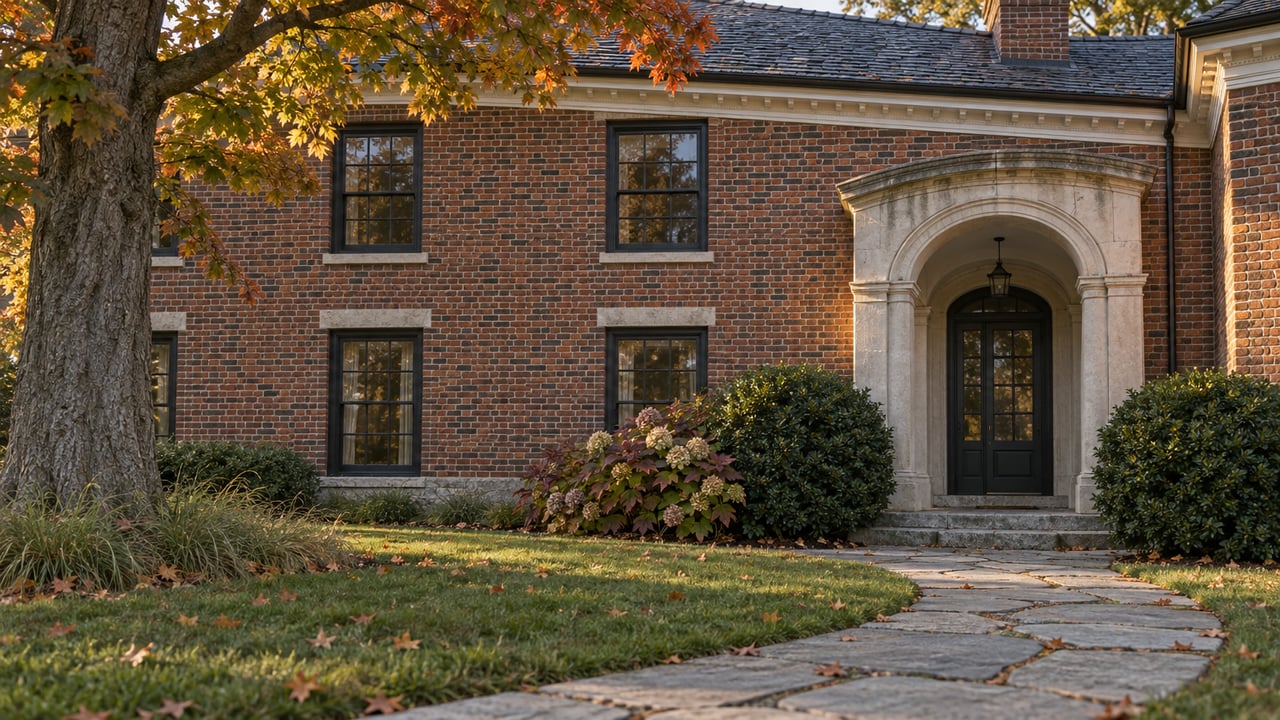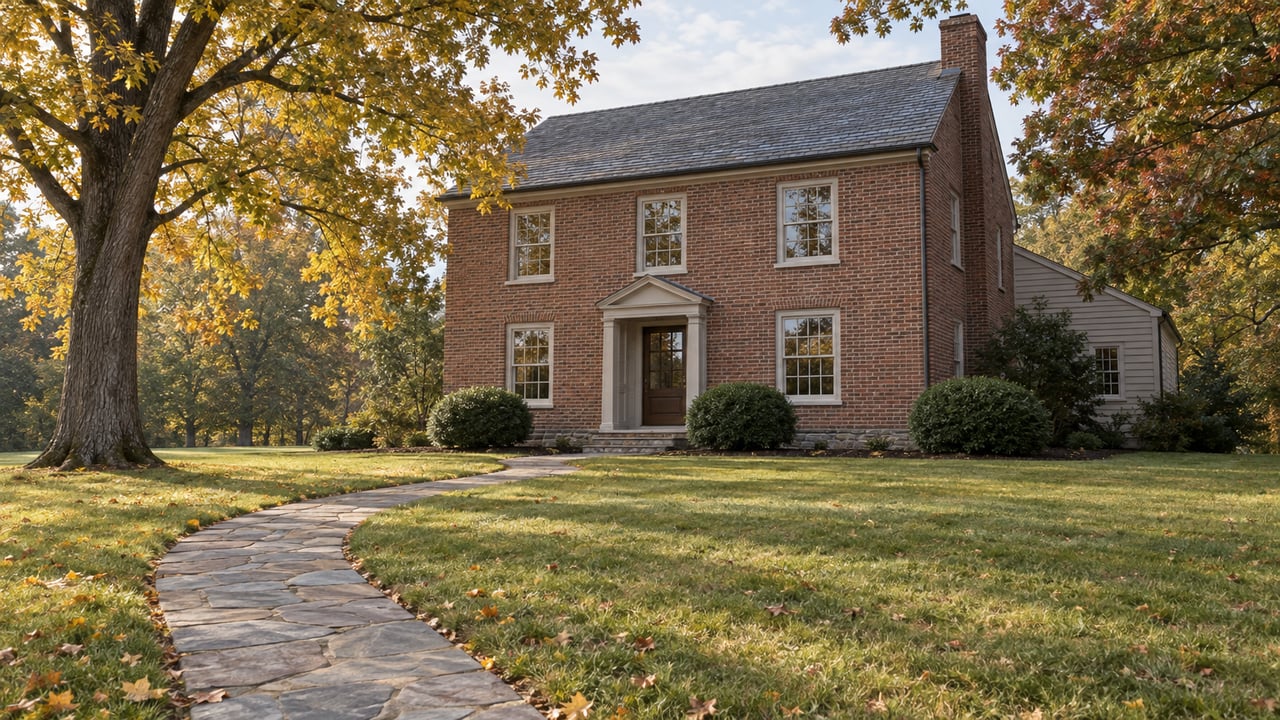
In the fall of 2009, Nick and Sangita Thakore bought a 1938 English-style house on Wachusett Road for $4.75 million. The 1.59-acre lot was already one of the better parcels in the neighborhood. The house itself was a respectable 7,200 square feet. Working with Boston architect Patrick Ahearn, the Thakores drew up plans to more than double it, adding indoor athletic facilities and an indoor pool to bring the finished home past 15,000 square feet.
A month before the town's updated size rules took effect, the Planning Board spent ninety minutes reviewing the project. One board member, Neal Glick, called it "a posterchild for Large House Review." A neighbor across the street worried the expanded footprint would worsen drainage that already pooled at the base of her driveway. Nobody was questioning the Thakores' budget or their architect's credentials. The board was questioning the math.
That distinction is the whole point of Wellesley's Large House Review, and it's the reason a home that looks like it has room to grow can quietly not have room to grow at all.
The Bylaw That Doesn't Care How Old Your House Is
Wellesley already has a Demolition Delay Bylaw that protects pre-1900 structures from a quick teardown. Large House Review is a different animal entirely, and it applies to nearly every single-family property in town, regardless of when it was built. The town's own Large House Review page lays out the trigger plainly: if a proposed home's Total Living Area plus Garage, known locally as TLAG, exceeds the threshold set for its zoning district, the project needs Planning Board approval before a building permit can be issued. That applies to brand new construction and to additions that increase existing TLAG by 10 percent or more.
The review itself isn't a rejection mechanism. The bylaw's own stated purpose is to make sure a large home fits its surroundings, evaluated against six standards: preservation of landscape, scale of buildings, lighting, open space, drainage, and circulation. A Design Review Board meeting typically happens about a month after submission, with a Planning Board hearing roughly a month after that. Most projects move from submission to permit in three to four months.
Three to four months only sounds manageable until you realize most buyers never budget for it, because nothing on a listing sheet warns them it's coming.
What Actually Counts Toward the Number
TLAG is not the square footage your real estate agent reports or the number on your tax card. It's a formula, and the formula has changed over time in ways that catch even architects off guard.
Before July 1, 2010, unfinished attic space in Wellesley barely counted toward TLAG, and even finished attic space only counted at 25 percent of its floor area. The amendment that took effect that summer, the same one the Wachusett Road hearing was racing against, changed that. Today, attic space with at least seven feet of ceiling height counts in full, finished or not. Basement space counts too, on a sliding scale tied to how much of the basement wall sits above grade. A basement where the average above-grade wall height reaches at least 25 percent of the total wall height starts counting toward TLAG, and the percentage climbs from there.
The practical effect is that two houses can look nearly identical from the street and carry very different TLAG numbers, simply because one finished its basement under the old rules and the other is proposing to finish it under the new ones.
The District Sets the Ceiling, Not the Neighborhood
Wellesley zones its single residence districts by minimum lot size, and the TLAG threshold moves with the district.
| District | Minimum Lot Size |
|---|---|
| SR10 | 10,000 sq ft |
| SR15 | 15,000 sq ft |
| SR20 | 20,000 sq ft |
| SR30 | 30,000 sq ft |
Actual Zoning Board of Appeals hearings show how this plays out on the ground. In one 2022 case involving a nonconforming rear lot, a proposed home came in at 5,278 square feet of TLAG, and board members noted it fell comfortably under the threshold for a 20,000-square-foot district. In a June 2025 hearing involving a historic colonial near Birch Road, a proposed addition brought TLAG to 4,735 square feet on an SR10 lot, and the applicant's team pointed out that a neighboring property at 10 Birch Road already carried roughly 6,284 square feet of TLAG, meaning the project would not be the largest home on the street even though it required review.
Neither case ended in a denial. Both required the applicant to file a TLAG affidavit and walk the board through the numbers before anyone talked about design.
The Documentation Comes Before the Verdict
Here's what surprises most homeowners: you don't get to skip the paperwork just because you're confident you're under the threshold. Before any Large House Review application reaches the Planning Board, the town requires a TLAG Affidavit filed with the Building Department for essentially every new single-family dwelling, every addition, and every new accessory structure over 100 square feet. The Building Department uses that affidavit to decide whether your project needs Planning Board review at all.
There's a second layer worth knowing about if your lot is already nonconforming, which is common on older, smaller parcels closer to Wellesley Square. The bylaw exempts a project from Large House Review only when it requires a Special Permit from the Zoning Board of Appeals for the nonconformity. A project that instead needs a simple variance, say for a setback or frontage issue, does not automatically get that exemption. That means a homeowner focused entirely on clearing a setback variance with the Zoning Board of Appeals can still find themselves separately in front of the Planning Board for size, on the same addition, on two different tracks. It's worth asking Planning Department staff directly which review track, or tracks, your specific lot triggers before assuming one hearing covers the whole project.
What It Actually Costs
The numbers are public. The Planning Board's own application form sets Large House Review fees for new construction at $2,000 for a proposed TLAG under 5,900 square feet, rising to $3,000 at or above that mark, with additions priced proportionally to the percentage increase in TLAG. That's before the survey, civil engineering, architectural, and landscape architecture work the town expects applicants to bring to the table, which typically adds several thousand dollars more depending on the complexity of the site, especially anywhere drainage is a live concern, as it was on Wachusett Road.
None of this is designed to be punitive. It's designed to slow a specific kind of decision down long enough for the town to look at it.
The 2025 Wrinkle Nobody's Renovation Budget Accounts For
Wellesley repealed its ADU owner-occupancy requirement in 2025, which means a homeowner can now add a detached accessory dwelling unit without living on the property themselves, and without the special permit hearing that rule used to require. That change removed one hurdle. It didn't remove Large House Review.
If a lot is already close to its district's TLAG ceiling, adding even a modest detached ADU can push the total over the threshold, and when that happens, the project lands in front of the Planning Board under Large House Review instead of the old ADU special permit process. The hearing changes names. The math doesn't change at all. For a family weighing an ADU as a way to keep aging parents nearby or to add flexible living space, that's a meaningfully different timeline than the by-right process the 2025 repeal seems to promise on paper.
What This Means Before You Write the Offer or the Design Brief
If you're evaluating a Wellesley property with an eye toward expanding it, whether that's a primary suite addition, a finished basement, or an ADU, the TLAG math deserves the same early attention as the inspection contingency. A house that reads as having obvious room to grow may already be sitting close to its district's ceiling once basements, attics, and garages are counted the way the town counts them, not the way a listing counts them.
The same logic applies if you're the one selling. A property marketed around its expansion potential is a stronger story when you can tell a buyer's team exactly where the TLAG numbers stand today, rather than leaving them to discover the threshold mid-design.
A Few Questions Worth Asking Directly
Does finishing an existing attic trigger Large House Review if I'm not changing the roofline? Generally no. Finishing attic space without altering the roof, adding dormers, or making other exterior changes is typically exempt, since the space was likely already counted or close to counted as existing TLAG.
Is Large House Review the same as the Demolition Delay Bylaw? No. The Demolition Delay Bylaw only applies to structures the Historical Commission identifies as significant, generally pre-1900 buildings, and governs whether a building can be torn down at all. Large House Review applies to homes of any age and governs the size and design of what gets built or added, regardless of the existing structure's history.
Can the Planning Board simply reject a project for being too big? The bylaw's stated intent is not to cap house size but to ensure a large house or addition fits the scale and character of its surroundings. In practice, review has meant negotiated design changes, drainage mitigation, and landscaping commitments rather than outright denial, based on the public cases available.
The Conversation Worth Having Before the Architect Does
A home's real ceiling in Wellesley isn't always visible from the curb, and it isn't always the number on the listing sheet either. If you're weighing a purchase with expansion in mind, or thinking about what an addition might mean for a home you already own, we'd rather walk through the TLAG math with you before you fall in love with a floor plan that the district was never going to allow. The Lara and Chelsea Collaborative works these questions into every Wellesley conversation, because the right number, checked early, saves months later. Request a Private Consultation and let's look at your specific lot together.